Villas, B&Bs, holiday homes and farmhouses near cities
Agritourism and culture: all our properties near the cities
choosing the best villas, B&Bs and Agritourism for your holidays in the countryside, since 1998
- Choose your destination
- Cancel Dates [X]
Info and Description
Cultural holidays in Italy: farmhouses, B&Bs, and vacation homes near art cities and historic villages.
Short definition
A cultural holiday in a farmhouse, B&B, or vacation home combines a stay in the quiet Italian countryside with visits to art cities, historic villages, UNESCO sites, museums, archaeological sites, and local cultural events. Italy is the country with the highest number of UNESCO-recognized sites in the world—90 in total, including 61 physical sites—and in 2024, it welcomed 74 million international tourists, making it the second most visited country in the world after Spain. Culture is the main driver of Italian tourism: for the fourth consecutive year, cultural motivation accounted for 45% of international visitors, and cultural destinations accounted for 63.2% of total visitors in 2024.
(Sources: ISTAT 2024; Federculture – 21st Annual Report, 2025; Isnart / Unioncamere)
In short
The accommodations on Agriturismo.net for cultural holidays are characterised by:
• strategic location near cities of art, historic villages, UNESCO sites, museums and archaeological sites
• stay in the quiet countryside with easy access to the main cultural attractions
• available types: farmhouses, B&Bs, holiday homes, villas and residences
• some facilities offer internal creative activities: painting, sculpture, drawing, embroidery and craft courses
Costs and seasonality:
• average stay in a rural structure near art cities: between €60 and €150 per person per night
• museum tickets: from free to over €20 (online booking recommended for the most visited sites)
• peak season: Spring and Autumn, with peaks during the holidays and in summer for the main art cities
Explanation
Italy, world leader in cultural heritage
Italy is the country with the highest number of UNESCO-recognized sites in the world: 90 total entries, including 61 physical sites of cultural, natural, and mixed heritage, 21 oral and intangible heritage sites, and 8 Memory of the World Register properties. In 2024, Italy was visited by 74 million foreign tourists ( 8.4% compared to 2023), for 254 million overnight stays, ranking it as the second most visited country in the world after Spain. Total visitors – both Italian and foreign – reached 466 million. 2025 saw a further acceleration: 479.3 million visitors ( 2.3%) and 146.3 million arrivals ( 4.7%) compared to 2024, with the foreign component growing by 4.1%.
(Sources: ISTAT 2024; Wikipedia – Tourism in Italy, updated June 2026; Lineaattuale.it, April 2026)
Culture: the primary driver of Italian tourism
Culture is the primary reason for foreigners to travel to Italy for the fourth consecutive year, according to the Observatory on the Tourism Economy of the Chambers of Commerce (Isnart/Unioncamere), accounting for 45% of international visitors. Cultural destinations accounted for 63.2% of total visitors in 2024, with 57% of them being foreign tourists. Italian state museums recorded an all-time record of 60.8 million visitors in 2024 (a 5.4% increase over 2023), with gross revenues of €382 million – an unprecedented figure. The Colosseum, Italy's most visited site, saw its visitors increase by 20% compared to 2023 and by 93.4% compared to 2019. In 2024, cultural events organized in Italy—concerts, fairs, exhibitions, sporting events—attracted over 273 million spectators and generated over 4 billion euros in revenue.
(Sources: Federculture – 21st Annual Report, 2025; Isnart / Unioncamere; TEHA Group, 2024)
Villages and small towns: the widespread culture that drives rural tourism
Alongside Italy's major art cities, historic villages and small towns are becoming increasingly attractive: a trend closely linked to rural tourism and agritourism, which often arise in the immediate vicinity of these places. 2025 saw significant investment in the enhancement of small villages, local museums, and minor archaeological sites, making cultural offerings more widely distributed throughout the region. In this spirit, staying in a farmhouse, a B&B, or a vacation home in the countryside allows for a more authentic and less crowded experience of cultural sites than staying in the city: fewer queues, less traffic, and more contact with the local area and its inhabitants. The villages certified by the "Most Beautiful Villages in Italy" circuit now number over 350 and are spread across all regions: a widespread network covering the entire country.
(Sources: The Most Beautiful Villages in Italy Association; Oceanya.it, 2025)
Jubilee 2025 and cultural events: a record year for Italian tourism
2025 was an extraordinary year for Italian cultural tourism, driven by the extraordinary Jubilee that brought millions of pilgrims and visitors from around the world to Rome. Music festivals, international art exhibitions, and major events contributed to a 12.8% increase in international arrivals compared to 2024 and a 15% increase in average spending per tourist. Rome confirmed its position among the world's most visited art cities; Milan consolidated its role as a hub for cultural and business tourism; Venice successfully introduced sustainable flow management through its entrance ticket system. Campania—with Pompeii, the Amalfi Coast, and Naples—recorded strong growth driven by cultural and food tourism.
(Sources: Oceanya.it, 2025; Isnart / Unioncamere / Progetto Mirabilia 2025/2026)
Market data and trends (Agriturismo.net)
Analyzing the offer of cultural holiday accommodations on Agriturismo.net:
• 46% of the facilities on the portal offer or have agreements with bicycle tours to explore nearby art cities or historic villages
• 15% offer internal creative activities (painting, sculpture, cooking, ceramics courses)
• the regions with the most facilities for cultural holidays are Tuscany, Umbria, Puglia, Piedmont and Sicily
(Sources: Based on data from Agriturismo.net)
Practical part
How to choose a property for a cultural holiday
• Check the distance from sites of interest: some properties are just a few kilometers from museums, villages, or UNESCO sites; others require longer trips. Also consider the availability of public transportation or the need for a car.
• Book popular museums and sites in advance: The Colosseum, Uffizi, Vatican Museums, Pompeii and other popular sites require online booking days or weeks in advance, especially in high season
• Ask if the facility organizes guided visits or cultural tours: some facilities collaborate with local guides or local agencies, offering more in-depth experiences than a self-guided visit.
• Consider the presence of creative activities: painting, ceramics or drawing courses in the facility enrich your stay with a creative experience linked to local artisan traditions
• Consider seasonality: spring and autumn are the ideal seasons for visiting art cities and villages, with fewer crowds and pleasant temperatures. Summer is the peak season, with more events but also longer queues and higher prices.
• Check the calendar of local events: fairs, festivals, temporary exhibitions, historical reenactments, and craft markets enliven Italian villages all year round. Many accommodations can suggest events scheduled during your stay.
• Ask the owner: Have any questions? Before booking, write directly to the property by entering your request without obligation using the "Ask the owner" button on the page of the property you are interested in.
FAQ
Why choose a farmhouse or holiday home for a cultural getaway instead of a city hotel?
Staying in the countryside and visiting a city of art during the day offers several advantages: generally lower prices than urban hotels, greater tranquility and space, restaurants featuring local products, and the absence of city noise and traffic. It's a particularly popular option for families, couples, and those who want to combine culture and relaxation without sacrificing either.
How many UNESCO sites does Italy have?
Italy is the country with the largest number of UNESCO-recognized sites in the world: 90 entries in total, including 61 physical sites (cultural, natural, and mixed), 21 oral and intangible heritage sites, and 8 properties inscribed in the Memory of the World Register.
(Sources: Wikipedia – Tourism in Italy, updated June 2026)
Is culture really the main motivation for foreign tourists in Italy?
Yes, for the fourth consecutive year. According to the Tourism Economics Observatory of the Chambers of Commerce (Isnart/Unioncamere), culture accounts for 45% of international visitors. Culturally-focused destinations accounted for 63.2% of total visitors in 2024, with 57% of them being foreigners.
(Sources: Isnart / Unioncamere; Federculture – 21st Annual Report, 2025)
How many foreign tourists visit Italy each year?
In 2024, Italy welcomed 74 million foreign tourists (an 8.4% increase compared to 2023) for 254 million overnight stays, ranking it as the second most visited country in the world after Spain. In 2025, total arrivals reached 146.3 million ( 4.7%).
(Sources: ISTAT 2024; Lineaattuale.it, April 2026)
What are the most visited museums in Italy?
The Colosseum in Rome has historically been the most visited site in Italy: in 2024, it recorded a 20% increase in visitors compared to 2023 and a 93.4% increase compared to 2019. Among the most important museums are the Uffizi Gallery in Florence, the Vatican Museums in Rome, the Capitoline Museums, the Brera Art Gallery in Milan, the National Museum of Naples, and the archaeological sites of Pompeii and Herculaneum. In 2024, Italian state museums reached a record 60.8 million total visitors.
(Sources: Federculture – 21st Annual Report, 2025)
What are certified villages and where can you find them?
There are over 350 villages certified by the "Most Beautiful Villages in Italy" network, spread across all Italian regions. Among the most famous are San Gimignano (Tuscany), Civita di Bagnoregio (Lazio), Alberobello and Locorotondo (Puglia), Matera (Basilicata), Erice (Sicily), Borghetto sul Mincio (Lombardy), and Spello (Umbria). Many of these villages are located in close proximity to farmhouses, B&Bs, and vacation rentals listed on the portal.
(Sources: The Most Beautiful Villages in Italy Association)
Do you need to book in advance to visit museums and UNESCO sites?
Yes, it's highly recommended for the most visited sites. The Colosseum, Vatican Museums, Uffizi Gallery, Pompeii, and other major attractions require online reservations days or weeks in advance, especially between April and October. A stay in the countryside, away from the bustle of cities, can make for more relaxing and less stressful visits.
Do the properties on Agriturismo.net also organize creative activities?
Some, yes. A growing number of farmhouses, B&Bs, and vacation rentals offer courses in painting, ceramics, sculpture, drawing, cooking, and other creative activities tied to local traditions. These experiences enrich a cultural stay with active participation, suitable for both adults and children.
When is the best time for a cultural holiday in Italy?
Spring (April–June) and autumn (September–October) are the ideal seasons: pleasant temperatures, fewer crowds than summer, lower prices, and a rich offering of local events such as fairs, festivals, and historical reenactments. Summer is the peak season for events, but also the one with the longest lines and highest prices.
Sources
21st Annual Report on Cultural Tourism – Federculture, 2025
Tourism and UNESCO sites: a new strategy for sustainability – Isnart / Unioncamere / Mirabilia 2026
The Most Beautiful Villages in Italy
Strategic Report on Sustainable Tourism and UNESCO World Heritage – TEHA Group, 2024
Agritourism Businesses in Italy, Year 2024 – ISTAT
How would you define Italy? We could describe it as an open-air museum where the splendid landscape and every form of culture merge, creating a picture of rare beauty. Countless testimonies of the great civilizations of the past have been gathered in museums, private collections, or preserved within archaeological sites, which remain an integral part of our cultural identity today.
Italy holds endless and wonderful surprises, such as the numerous artistic centres declared World Heritage Sites by UNESCO .
Wonders like Rome, Florence, Siena, Pisa, Assisi, Venice are "only" the most famous for their beauty and tourist influx, in reality our beautiful country is entirely dotted with villages and cities of incomparable beauty and historical importance.
Also not to be forgotten are the countless literary and culinary events , musical events, and art exhibitions that continue to nourish the soul of our splendid peninsula. Among other things, you will obviously find highlights of Italy's most famous museums, such as the Uffizi Gallery in Florence , the Capitoline Museums in Rome , and the Brera Art Gallery in Milan , as well as breathtaking archaeological sites like Pompeii and Herculaneum , or the spectacular Valley of the Temples , where the roots of our civilization lie.
It's impossible to forget one of the cornerstones of Italian tradition: cuisine! Every dish, every recipe tells the story of a particular geographic area and its inhabitants. It's a fundamental part of our culture, capable of offering visiting tourists the thrill of a genuine meal, cooked with love and the wisdom of expert hands. Are you ready to sample our traditions? For true gourmets, always ready to grab a fork, don't miss our Food and Wine Holidays on Farm Holidays section!
At Agriturismo.net, we've decided to offer you our selection of B&Bs, vacation homes, villas, and farmhouses near cities of art and villages rich in historical and cultural interest. Staying in the quiet countryside will allow you to escape the hustle and bustle of the city and explore traditional villages and ancient residences of noble families from the past. What if the farmhouse offered courses in painting, sculpture, drawing, embroidery, and anything else related to creativity and art? Even better! Browse all our properties and customize your stay: we'll be happy to help you plan your art and culture holiday!

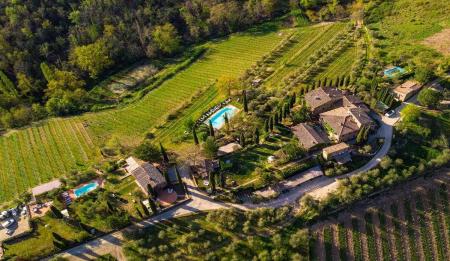
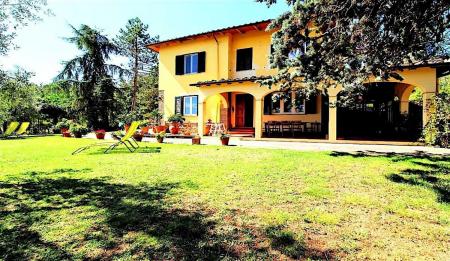
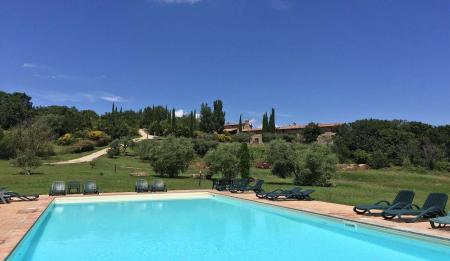
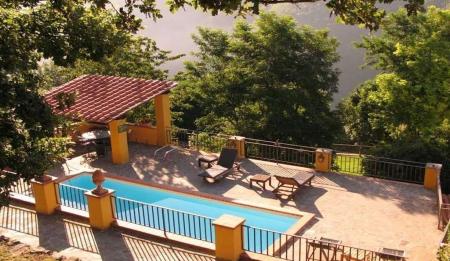
Look at the related items - Cultural holidays in a farmhouse


You could be interested in these additional travel tips
Discover all our ideas for your next weekend! A relaxing, with dinner, or a romantic getaway: we've got what you need!