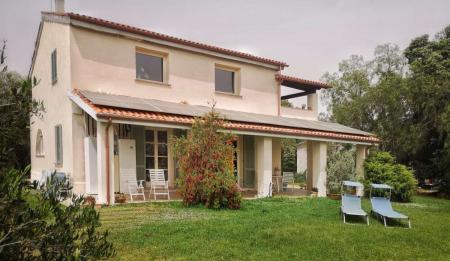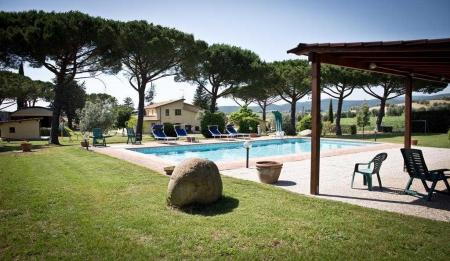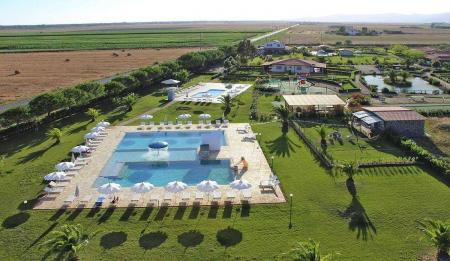
Unexploited for centuries, Maremma encompasses 130km of the coastline, an infinite series of creeks, coastal marshland, forests and maquis where beaches, pine forests and a range of magnificent reefs interchange and numerous inlets that hosts various safe dockings such as Talamone, the Porto S. Stefano, Porto Ercole, Cala Galera, Marina di Grosseto, Punta Ala, Castiglione della Pescaia and those of the Islands of Giglio and Giannutri. These places in addition to Follonica and Principina, which are by the sea, offer very good accommodation facilities in an area that has wholly conserved its natural characteristics.
The numerous protected areas such as Maremma’s Natural Reserve, Orbetello Lagoon, Burano and Accesa lakes and the marshy areas of Diaccia Botrona represent a real and perfect paradise for nature lovers.
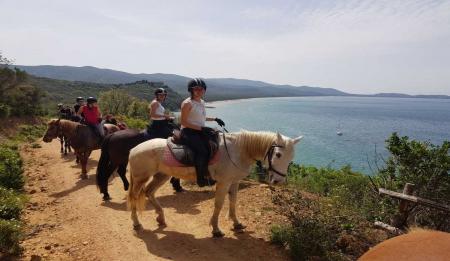
In Maremma, it is not difficult to come across animals that wander about freely such as deer, badgers, foxes and wild pigs that inhabit the pine forests and can also be dangerous, but seeing the wild is worthwhile. The Maremma horses mounted by Maremma cowherds, cow-boys that put on special clothing and often attend feasts and festivals are also famous, this is because it is a tradition of this land.
Maremma enjoys an artistic and cultural heritage attributable to a very wide historical period. On the north of Grosseto, the Estrucan cities of Roselle and Vetulonia reserve a part of a massive wall thus offering archaeological sites and an ancient city cemetery with various grave monuments. The Etruscan relics found on the graves that were scattered in the whole area are preserved in Grosseto, Massa Marittima and Vetulonia archaeological museums and in Sovana, Vetulonia and Roselle archaeological areas. The ancient cities of Cosa and Roselle take us back to the Roman period.
Farther in the north Massa Marittima a strongly secured city on top of a hill, offers a very interesting perspective of a medieval centre to the tourists thus remembering the blooming 13th century communities. This mining town that produced silver, was given the first mining code in history in 1310. The Roman and Gothic style staircase constructed in the 4th century in Garibaldi square that leads to the Duomo di San Cerbone, is of great importance just as its random arcs with galleries surrounded with pinnacles. The Pretorio Palace also of the same period, offers a travertine facade decorated with crests and ornaments of double lancet windows. Inside the archaeological museum. A massive Roman complex, a communal palace came about as a result of the Roman tower houses.
Castiglione della Pescaia located on the coast, is a tourism place very famous for bathing. It has a dense pine forest and a sandy beach that also shelters a small medieval village enclosed within the walls and protected by a fortress. Punta Ala, not very far away is probably a more exclusive locality in this area with its dense vegetation sheltering magnificent villas.